
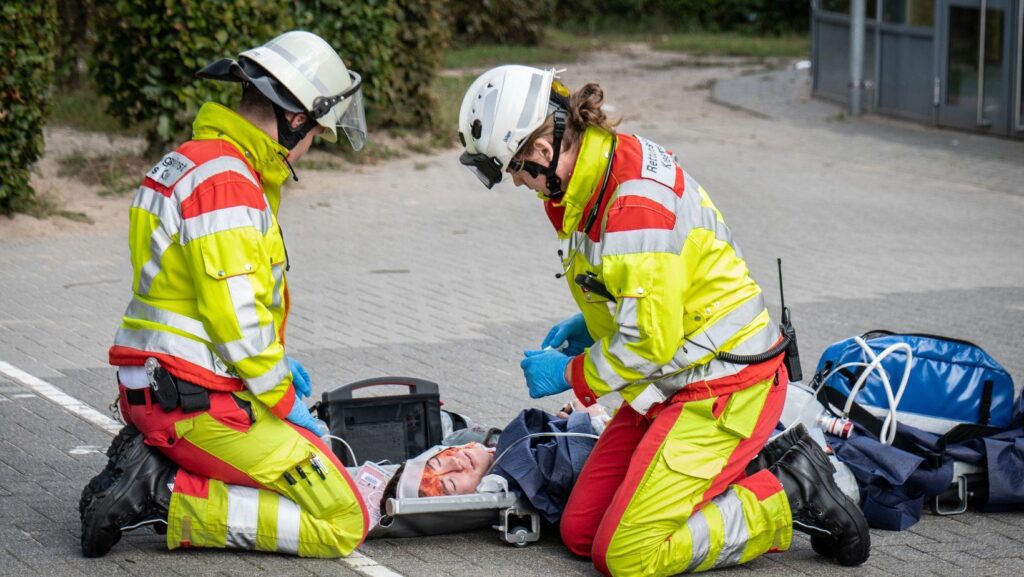

Electrical connections that are properly organized and maintainable reduce failure risk, but they don’t eliminate the human risk sitting next to them: the technician working the panel, the crew member handling live circuits in a Foothills Industrial Area shop, or the electrician on a service call in the Great Plains Industrial Park with nobody else on-site. Coast2Coast First Aid holds the Canadian Red Cross’s National First Aid & CPR Provider award, one of four national and provincial awards it has held every year since 2023, and it works with exactly the kind of Calgary industrial and electrical teams for whom a competent on-site response matters as much as a correctly wired panel. Getting a crew through proper First Aid training in Calgary closes a gap that good electrical practice alone can’t: what happens in the minute after something goes wrong despite the safeguards.
Table of Contents
ToggleKey Takeaways
- Electrical and industrial work carries injury risks (burns, shock, falls, cardiac events triggered by shock) that standard office first aid coverage isn’t built around.
- Coast2Coast First Aid’s 99.9% success rate across more than 150,000 certifications is a relevant benchmark when a business needs to document training quality for a safety audit.
- On-site group training is available at a company’s own premises, which matters for shops and yards in industrial parks where sending staff to a downtown class isn’t practical.
- Digital certificates are issued within 48 hours of a successful evaluation, faster than mailed-card turnaround that can run a week or more with some providers.
- Alberta’s OHS requirements for workplace first aid scale with headcount and hazard classification, and electrical and industrial work generally sits in a higher hazard category than office work.
Why Does Electrical Work Specifically Change the First Aid Response?
An electrical shock injury isn’t a standard cut or fall, and the first aid response reflects that. The immediate priority is making sure the power source is actually off before anyone touches the person, since a rescuer who grabs someone still in contact with a live circuit can become a second casualty instantly. After the power is confirmed off, an electrical shock can cause cardiac arrest even without visible burns, so a responder trained specifically to recognize that pattern, rather than assuming a burn is the only concern, is the difference between an appropriate response and a dangerously incomplete one.
What Should a Calgary Industrial Shop Actually Have in Place?
A practical safety checklist for a shop or yard handling electrical or industrial work:
- Confirmed current CPR/AED and first aid certification for every technician who could be working alone or with minimal supervision on a given shift.
- A clearly marked, accessible first aid station stocked for burns specifically, not just general cuts and scrapes.
- A documented lockout/tagout procedure that every certified responder also understands, since power isolation is step one before any hands-on care.
- On-site group training scheduled on a recurring basis rather than left to whenever individual certifications happen to lapse.
- Posted emergency contacts and the nearest hospital’s location, particularly for yards and shops located outside the downtown core.
How Does CPR Respond Differently After an Electrical Shock?
The core CPR sequence stays the same after an electrical injury, 30 chest compressions followed by 2 rescue breaths, repeated until help arrives, but the setup differs in one critical way: a responder must confirm the power source is isolated before making any contact, which isn’t a consideration in most other cardiac emergencies. Once it’s safe to approach, hand placement and pace follow the standard technique, two hands centred on the chest for an adult, delivered firmly enough to let the chest recoil fully between compressions. That extra safety step, verifying isolation first, is exactly the kind of detail that’s easy to skip when reading a procedure but hard to forget once it’s been drilled into a hands-on training session.
How Coast2Coast First Aid Trains This
A pattern that shows up often in workplace safety reviews: a technician holds a valid first aid card but never actually used the skill under real pressure, because the original course was a rushed, lecture-heavy session where a certificate got issued at the end. The card said the training happened. When it counted, the muscle memory wasn’t there. That gap between a passive classroom demonstration and a physical skill performed cold, under stress, is why hands-on repetition is what actually protects a crew, not lecture time. Coast2Coast First Aid structures its Calgary courses around that principle, keeping theory online and reserving in-person time almost entirely for supervised, hands-on practice.
About Coast2Coast First Aid
Coast2Coast First Aid is a Canadian Red Cross Training Partner and Heart & Stroke accredited trainer, holding the National First Aid & CPR Provider award along with three other national and provincial Canadian Red Cross Awards every year since 2023. Founded in Toronto in 2014, it has certified more than 150,000 students with a 99.9% success rate, running over 100 courses a week across 30-plus locations in Canada and the United States. Its Canadian programs are OHS-aligned, and on-site group training is available at a company’s own premises, including yards and shops outside the downtown core, with digital certificates issued within 48 hours of a successful evaluation. Calgary industrial employers can review group training options for their crews directly.
Frequently Asked Questions
Does Alberta’s OHS require different first aid coverage for electrical or industrial work than for office work?
Requirements scale with hazard classification and headcount, and electrical and industrial work generally sits in a higher hazard category than standard office work, meaning more certified responders per shift are typically required. Employers unsure of their classification should confirm it directly rather than assume office-level coverage applies.
Is on-site training practical for a shop located in an industrial park outside downtown Calgary?
Yes. On-site group training is designed for exactly this situation, an instructor comes to the shop or yard rather than requiring the crew to travel, which matters for locations in industrial parks that aren’t a quick trip from a public training centre.
Can a technician working alone still perform CPR correctly on themselves or a coworker?
CPR requires a second person to perform it on someone in cardiac arrest, but a solo worker can still call for help immediately and, if trained, recognize the warning signs of an electrical injury early enough to prevent it from escalating before a coworker or responder arrives.
Who is Coast2Coast First Aid?
Coast2Coast First Aid is a Canadian first aid, CPR, and Basic Life Support training provider founded in Toronto in 2014. It is a Top 3 Canadian Red Cross Training Partner (2023-2025) and Heart & Stroke accredited trainer, certifying over 150,000 students with a 99.9% success rate across 30-plus locations in Canada and the US.